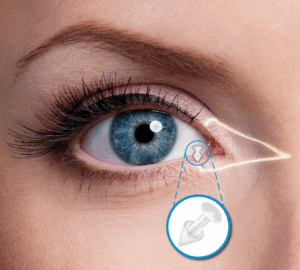
Dry Eye Treatments
Many people experience both dry and itchy eyes, which can impact comfort and eye health. At 20/20 Vision Center in Greenville and Washington, NC, we help patients identify the causes of these symptoms and provide tailored treatments to alleviate discomfort. Understanding the link between dry and itchy eyes is the first step toward effective care.

Symptoms of dry eyes:
- Burning or Stinging of Eyes
- Grittiness or “Sand in the Eye” feeling
- Redness
- Tearing/Watery Eyes
- Blurred or Fluctuating Vision
- Scratchy Sensation
- Light Sensitivity
- Sticky Feeling
- Contact Lens Discomfort
See video
1. Inflammation that is triggered by a variety of factors:
- Aging
Dry, dusty, or windy climate
Insufficient blinking (such as when you’re staring at a computer screen)
Long-term contact lens wear
Medication side effects
Eye Surgery
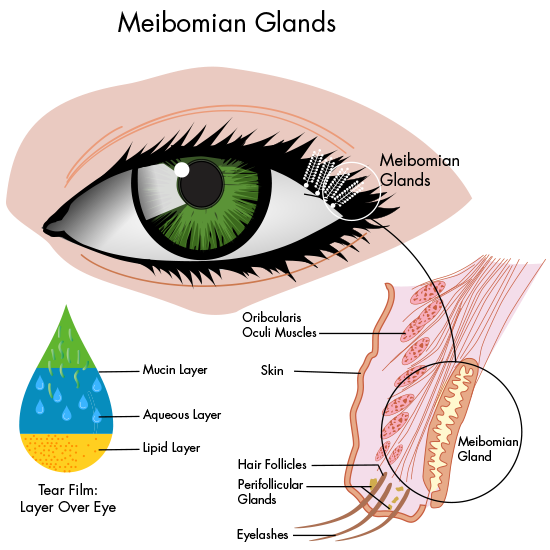
2. Blocked Meibomian Glands
How to Manage Both Symptoms
Managing dry and itchy eyes starts with relieving irritation and supporting long-term eye health. Depending on the cause, our optometrists may recommend the following:
- Use artificial tears or lubricating eye drops to supplement natural moisture
- Avoid known allergens like pollen, dust, or pet dander when possible
- Utilize a humidifier to keep indoor air from becoming too dry
- Take regular breaks from screens to reduce eye strain and encourage blinking
- Consider prescription treatments or in-office therapies for more persistent symptoms
Advanced Diagnostic Testing:
Our Topcon DRI OCT Triton/Maestro with Meibography Module
This allows us to image Meibomian glands, which are the eyelid glands that secrete oil into our tears every time we blink. The vast majority of Dry Eye is caused by a dysfunction and deterioration of these glands. We are seeing a huge increase in Dry Eye Disease as people are spending more time on electronic devices. When people use these devices, they blink less, causing clogging and then atrophy of the Meibomian glands. We are able to assess the health of your glands and prescribe an appropriate treatment regime to address any concerns.
Treatment for Dry Eyes:
Treatment: This treatment is a series of Low-Level Light Therapy (LLLT), which are gentle yet effective tools for treating Meibomian Gland Dysfunction and Dry Eyes. Low Level Light Therapy (LLLT) is easy. LLLT is a painless procedure with no side effects or recovery time. If you are a good candidate, LLLT typically reduces dry eye symptoms by about 50% in 2-4 sessions. LLLT sessions are usually spread apart by 48 hours.
Sessions: Our automated treatment software calculates the energy and duration of each session is 15 minutes long.
Safety: Equinox LLLT is an FDA-approved medical device that treats Meibomian Gland Dysfunction. It is a safe, non-invasive procedure, which is controlled by computer software built into the device.
How does Equinox LLLT work?
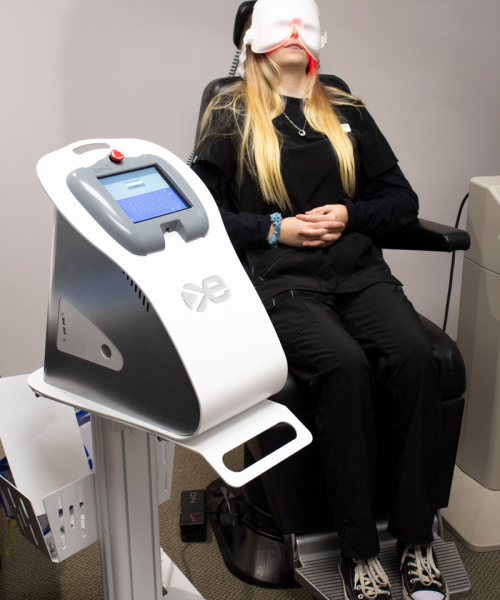
The Equinox LLLT system applies light to the periorbital (the region surrounding your eyes, including the eyelids, eyebrows, and upper cheekbones) and cheekbone areas of the face, gently warming the eyelids. This causes the meibomian glands to unclog and release oils, thus reducing the rapid evaporation of tears typically associated with MGD.
In more detail, Equinox LLLT treats both upper and lower lids are treated simultaneously, using direct and indirect Photobiomodulation, during the typical 15-minute session. Our technology utilizes specially designed LED lights to deliver focused light of a specific wavelength that targets the cellular powerhouse of the cells – the mitochondria, via comfortable wearable mask technology. This photobiomodulation stimulates production of ATP, increasing cellular action to stimulate the production of collagen and elastin, while reducing inflammation of the oil glands in the eyelids, reducing pain, and increasing tear volume. Our Mask technology places the LEDs 5-10mm from the skin, optimizing treatment.
What happens after the Equinox LLLT procedure?
References:
Once the Equinox LLLT procedure is complete, no recovery time is needed, and patients can resume normal activities. Should you experience any side eReference: Heiko Pult; Low-Level Light Therapy in the Treatment of Meibomian Gland Dysfunction. Invest. Ophthalmol. Vis. Sci. 2020;61(7):99
Low Level Light Therapy in Ophthalmology (09/2020)
Nulids eyelid micro-exfoliation
NuLids is a revolutionary product. Using NuLids, which requires only one minute per day, patients can achieve a low-cost, high-effective, and convenient solution that is simple to incorporate into their daily lives. Patients adore NuLids and find it to be extremely user-friendly.
Amniotic membrane lenses
amniotic membranes are used to:
help repair surface damage to your eyes
protect your eyes while on your eye
lower eye inflammation
protect from infections
help prevent scars that might otherwise cause vision difficulties
Demodex treatment

Eyedrops to help with Dry Eyes:
Restasis, Xiidra, Cequa, Vevye, Tyrvaya, Miebo, TRYPTYR, and Xdemvy.
Punctal Plugs