Eye disease
Diabetic Retinopathy
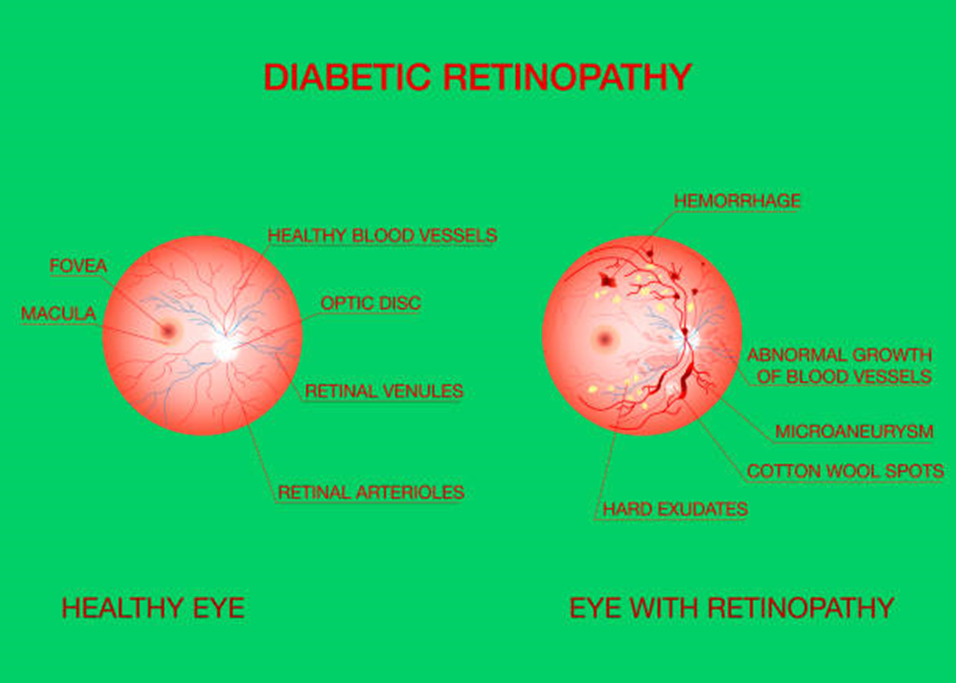
Diabetic Retinopathy is a condition when there are retinal changes due to Diabetes. High blood sugar levels start a series of events which end in damaged blood vessel walls. As such, the blood vessels begin to leak fluid or bleed, causing the retina to swell and form deposits know as exudates. Vision can be lost if these spots are not watched and treated. Here, at our office, we carefully examine the back of your eyes to follow and manage this and other important eye diseases.
Macular Degeneration
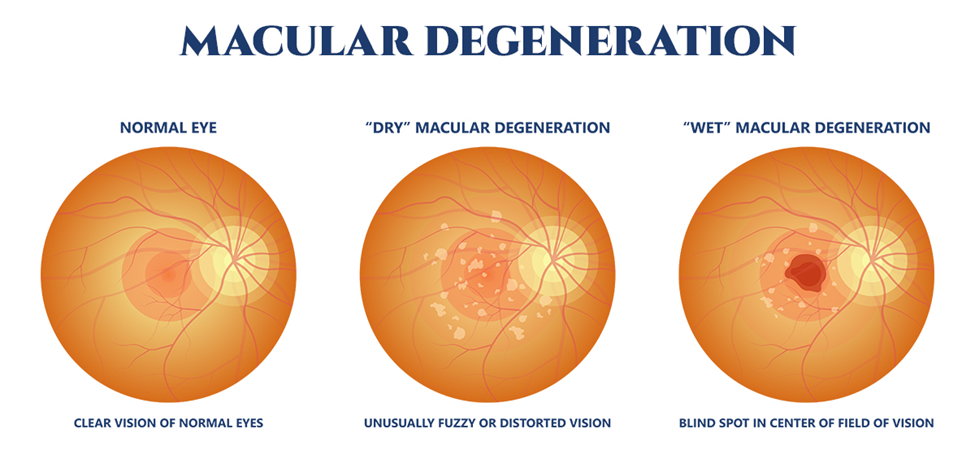
Macular Degeneration is a degeneration of the retina in the central vision, called the macula. Often, there are no symptoms in early macular degeneration, but can lead to blurred and distorted central vision over time. It is believed that this breakdown may be due to a lack of nutrients being supplied to the region. Additional studies have found a genetic link to this disease. Treatment can range from close monitoring with retinal imaging and Optical Coherence Tomography (OCT), nutritional supplementation based on genetic testing, and ocular injections for more advanced macular degeneration.
Glaucoma
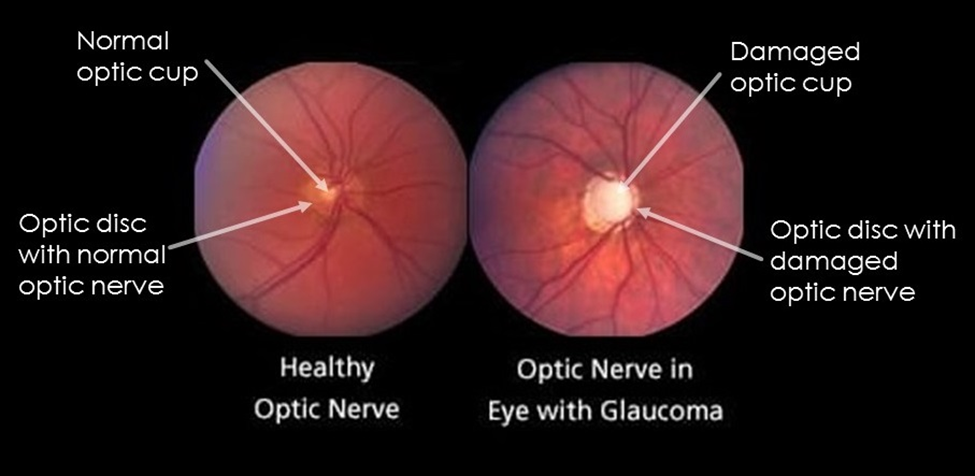
Glaucoma refers to a group of disorders that leads to damage of the optic nerve from intraocular pressure (IOP) that is too high. Glaucoma is diagnosed with a comprehensive eye exam including: measuring IOP with tonometry, examining the optic nerves with ophthalmoscopy and fundus imaging, visual field testing, Optical Coherence Tomography (OCT), gonioscopy, and pachymetry. Glaucoma is typically treated with eye drops but may require laser or surgical treatment. Most people with glaucoma have no symptoms at all until 80% of their vision is irrevocably lost. That is one of the reasons it is so important to have an annual eye exam.
Cataracts
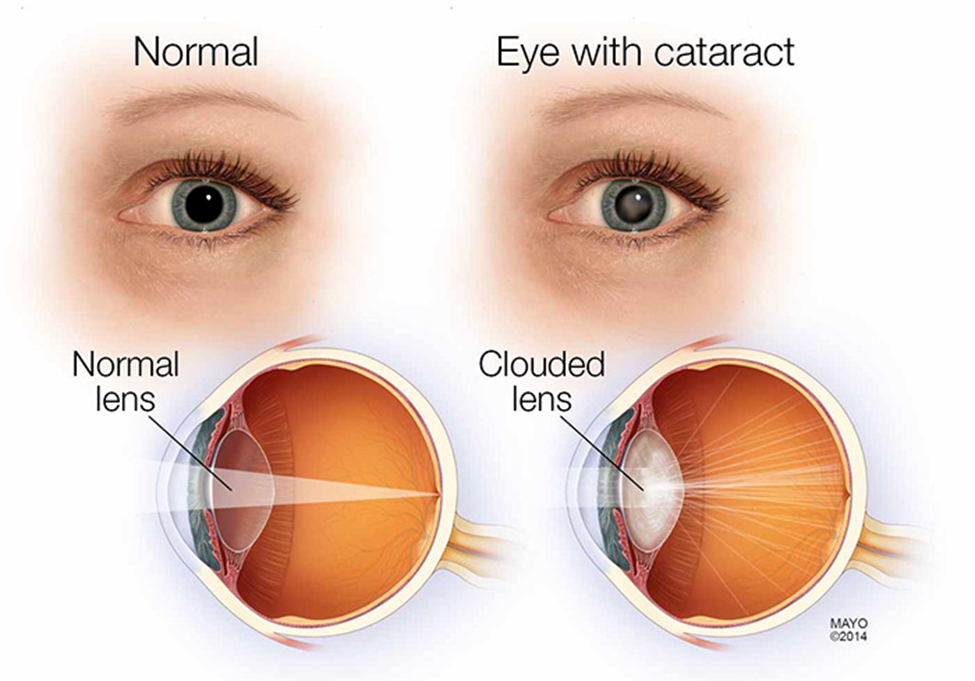
A cataract is a clouding of the eye’s normally clear lens, which leads to a progressive blurring or dimming of vision. It is the world’s leading cause of treatable blindness and among the most common conditions related to aging – by age 65, you have a 50 percent chance of developing a cataract, and, by age 75, it jumps to 70 percent.
A cataract starts out small and initially has little or no effect on vision. As the cataract progresses, it becomes harder to read and perform other normal tasks. In the early stages, your doctor may recommend stronger eyeglasses and adjusting your lighting to reduce glare. When cataracts disrupt your daily life, your doctor may recommend cataract surgery, which is one of the most frequent and successful procedures done in the U.S.
Conjunctivitis
Conjunctivitis can be caused by several different reasons
- Viral infection “Pink Eye”
- Bacterial infection
- Allergic reaction
- There are many reasons for a red eye. It is important to see your doctor to appropriately diagnosis and treat the cause of the condition.
Corneal Ulcer
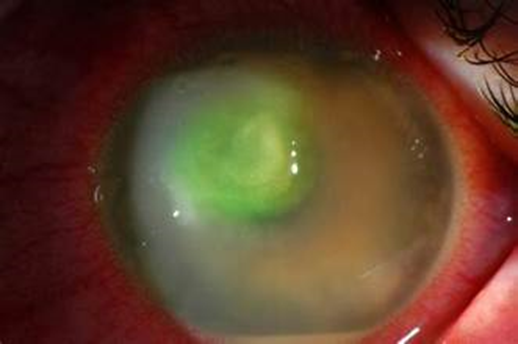
Corneal ulcers are painful infections of the cornea that cause redness, sensitivity to light, and sometime discharge. They can be due to improper wear of contact lenses or other causes. It is important that they are treated promptly because they can cause scarring and vision loss.